Compact Fish Finder for Sale for Deep Water
Fish Finder Configuration Tips: Maximizing Your Device's Potential
Installing a fish finder effectively is crucial for maximizing its performance. Appropriate modifications to visual settings, responsiveness, and frequency can greatly enhance performance. Moreover, understanding installation methods and sonar types can yield remarkable results. A large number of fishing enthusiasts miss critical elements that can result in suboptimal results. Reviewing typical errors and best practices will offer useful guidance for all fishing hobbyists aiming to elevate their performance on the water.
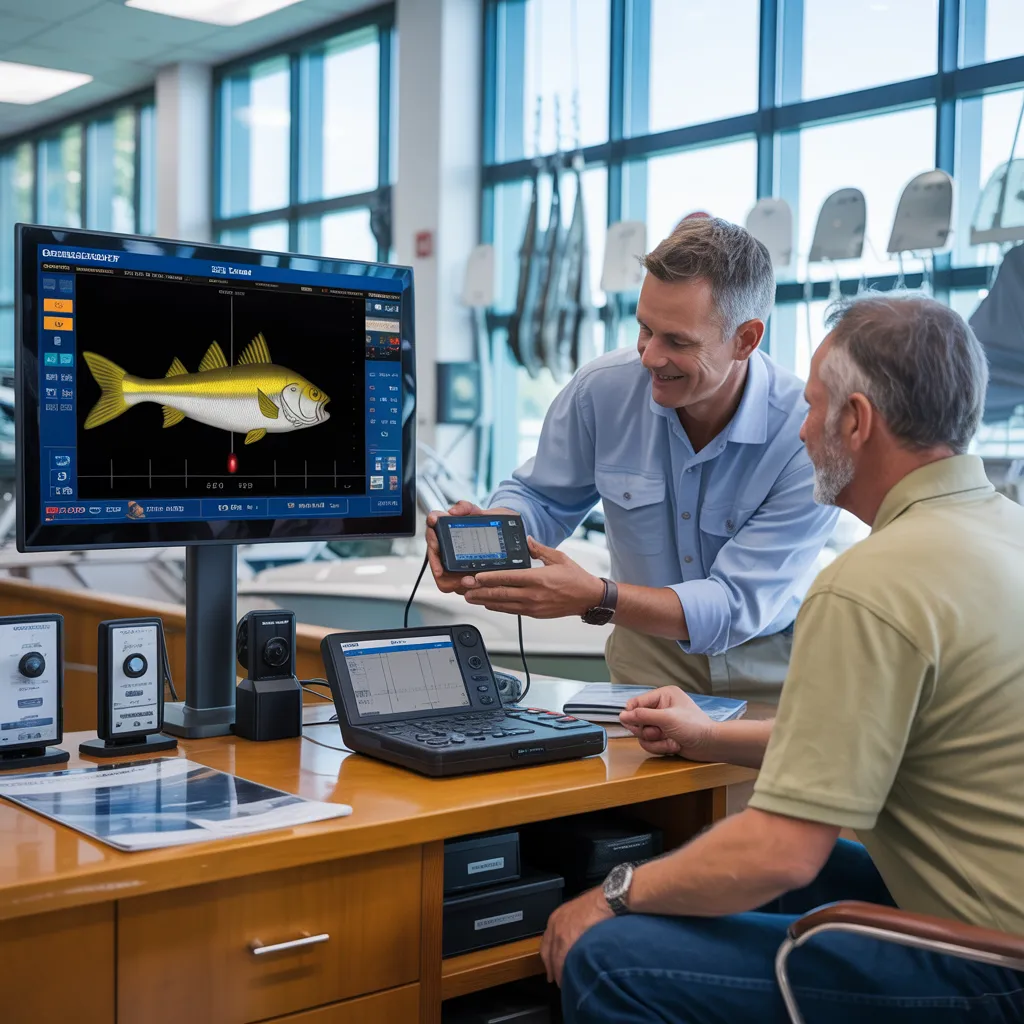
Adjusting Your Fish Finder Display for Optimal Clarity
An optimally configured fish finder display is vital for successful fishing. The clarity of the display directly affects a fisherman's ability to identify underwater structures, fish locations, and water depth. Properly adjusting brightness and contrast settings can considerably boost visibility, especially in varying light conditions. Moreover, choosing the right color palette helps differentiate between various underwater features and fish types.
Utilizing the zoom capability can further assist in highlighting particular regions of concern, delivering a more thorough look at the aquatic surroundings. Fish finders should get accustomed to their unit's design and indicators, as grasping these components enables faster analysis of the readings shown.
Additionally, ensuring that the screen is clean and free from obstructions is vital for maintaining clarity. By implementing these practices, fishermen can maximize the effectiveness of their fish finder, leading to a more successful fishing experience.
Optimizing Sensitivity and Frequency Settings for Success
Fishing success often copyrights on the careful calibration of sensitivity and frequency controls on a fishfinder. Sensitivity determines the unit's capability to detect objects and fish in the water. Should it be set too low, it may miss essential targets; if too high, it may produce too much noise, leading to confusion. Anglers should start with a mid-range sensitivity setting and progressively modify based on the environment, such as water depth and visibility.
Frequency adjustments also play an important role. Lower frequency settings reach greater water depths, making them ideal for locating fish in deeper areas, whereas higher frequencies deliver greater clarity in shallow waters. Users are recommended to explore these adjustments, observing how modifications impact their results. By optimizing sensitivity and frequency settings, users can enhance their fish-finding capabilities, ultimately increasing their chances of a successful fishing trip.
Picking the Perfect Fish Finder for Your Fishing Goals
Choosing the right fish finder is crucial for optimizing fishing success, as various types and features cater to numerous fishing environments and techniques. Those who fish must first think about the type of fishing they are looking to do—inshore or offshore, freshwater or saltwater. For instance, a portable unit may be ideal for those fishing from a kayak, while a sturdier, easier-to-install model is better for full-sized boats.
Next, the frequency of the fish-finding device plays a vital role. Elevated frequencies offer precise images in shallower waters, while lower frequencies reach greater depths, making them the preferred choice for fishing at greater depths. Additionally, capabilities such as GPS functionality, chart plotting, and side-scan technology can improve the overall fishing experience, allowing anglers to navigate and identify fish more effectively.
When all is said and done, understanding one's unique fishing needs and preferences will drive the selection process, ensuring that the ideal fish finder enhances overall fishing effectiveness and enjoyment.
Setting Up Your Fish Finder Like a Pro
Installing a fish finder calls for close attention to several critical aspects. Selecting an ideal location, anchoring the wiring securely, and setting the angle with precision may significantly improve the equipment's efficiency. Following these steps confirms that the fish finder functions effectively and provides accurate readings.
Find the Perfect Location
When evaluating the optimal location for a fish-finding device, it's crucial to find the right balance between accessibility and functionality. The device should be installed in a spot that allows for easy viewing while handling the watercraft. A proper spot is usually at the console or near the helm, ensuring the angler to quickly glance at the screen without diverting attention from steering. Additionally, the mounting system should be secure to minimize vibrations that could impact the equipment's performance. It's also important to consider the angle of the display; a gentle tilt can associated resource enhance visibility in direct sunlight. At the end of the day, selecting a location that reduces obstructions while maximizing accessibility will substantially elevate the complete angling experience.
Secure All Wiring Appropriately
Organizing wiring effectively is vital for optimal fish finder operation and lifespan. Disorganized or loose wiring can lead to connectivity issues and long-term wear. It is important to guide the wiring carefully along the boat's interior framework, keeping away from sharp surfaces that could damage cables. Utilizing zip ties or adhesive fasteners can help keep the cables organized and secure. Moreover, ensuring that connections are waterproofed will prevent corrosion and potential electrical malfunctions. When possible, tuck wiring within the boat's structure or under trim panels to reduce environmental exposure. A well-organized wiring system not only improves performance but also creates a neater, more refined finished appearance. Above all, thorough planning of the wiring arrangement can significantly influence the fish finder's effectiveness.
Align the Angle Correctly
Correctly setting the angle of a fish-finding device is crucial for maximizing its effectiveness on the water. The sensing unit must be positioned correctly to ensure accurate data and ideal sonar performance. Typically, it should be adjusted to a slight downward angle, allowing the sonar waves to move through the water column effectively. This angle can differ based on the watercraft's pace and the aquatic environment. A standard recommendation is to set about 10 to 15 degrees below the waterline. In addition, confirming that the sensing device is free from obstructions, such as water turbulence or debris buildup, will improve clarity. Consistently inspecting and modifying the tilt, especially when changing locations or conditions, will help sustain the fish finder's precision and dependability.
CHIRP vs. Traditional Sonar: What You Need to Know
Recognizing the variations between CHIRP and classic sonar is essential for fishermen seeking to elevate their angling results. Standard sonar functions by delivering a lone frequency burst, which can produce less detailed images and restricted depth coverage. This technique may have difficulty to distinguish between aquatic life and submerged objects, frequently resulting in overlooked catches.
By comparison, CHIRP sonar, which stands for Compressed High-Intensity Radiated Pulse sends out multiple frequencies at once, creating highly detailed and reliable pictures of what lies beneath the water. This advanced system enables better target distinction, enabling users to more readily assess fish dimensions and depth. CHIRP further offers enhanced reliability in diverse aquatic environments, providing more accurate data whether in shallow or deep water.
At the end of the day, choosing between CHIRP and traditional sonar depends on the specific needs and fishing environments of an angler. Evaluating these differences can substantially affect the performance of a fish finder and enhance the overall fishing experience.
Interpreting Fish Finder Readouts Like a Pro
Analyzing fish-finder readings can considerably boost an fisherman's effectiveness on the water. Grasping the diverse visual cues shown is essential. As an illustration, fish commonly display as marks or arcs; the shape and size can denote their depth and size. A solid reading generally represents a fish, while a narrow line may indicate juvenile fish or baitfish.
Depth readings help anglers target specific layers where fish are more active, including areas around underwater structures or the thermocline. In addition, recognizing the nature of the bottom substrate—be it hard or soft—can influence fishing strategy.
Fine-tuning sensitivity levels results in cleaner images, eliminating noise that may obscure critical details.
Ultimately, recognizing motion patterns in the display can indicate groups of fish, enabling anglers to position their bait and tackle effectively. By mastering these interpretations, anglers can considerably enhance their chances of a productive fishing experience.
5 Common Mistakes to Avoid When Setting Up Your Fish Finder
Successfully interpreting fish finder displays improves fishing strategy, but the setup process can substantially affect performance. One common mistake is neglecting to calibrate the fish finder according to local conditions, which can result in faulty results. Another frequent error involves improper transducer placement; if not positioned accurately, it can result in poor signal reception. Anglers frequently neglect to fine-tune sensitivity controls, which may lead to missing critical underwater features. Additionally, failing to update software can limit the device's capabilities, rendering it less effective. Finally, many overlook the necessity of secure power supply links, which can lead to inconsistent operation. By preventing these common mistakes, fishermen can unlock their fish finder's full capabilities and enhance their time on the water.
Frequently Asked Questions
How Do I Maintain My Fish Finder for Longevity?
To keep a fish-finding device for longevity, consistently clean the sensor unit, shield it from extreme temperatures, ensure proper storage, upgrade the software, inspect the cables for wear, and refrain from exposing it to saline water without proper rinsing.
Can My Fish Finder Be Used in Saltwater?
Absolutely, these devices are suitable for use in saltwater. That said, it's important to confirm that the unit is rated for saltwater use to avoid corrosion damage and ensure top performance in marine environments. Regular maintenance is strongly suggested.
What Are Some Common Troubleshooting Tips for Fish Finders?
Typical troubleshooting steps for fish finders involve verifying power connections, confirming the transducer is correctly installed, adjusting sensitivity settings, evaluating display settings to improve clarity, and making sure the device has the most recent software updates.
What Is the Process for Updating My Fish Finder's Software?
To refresh a fish finder's software, you should link the device to a computer, obtain the most recent firmware from the manufacturer's website, and adhere to the supplied installation guidelines for a successful update.
Do Accessories Help Boost Fish Finder Performance?
Indeed, various accessories can boost fishfinder effectiveness. Upgraded transducers, protective cases, and power supplies enhance performance, while mounts and display screens improve usability. These upgrades provide improved readings and a superior experience on the water.